

What is information governance for First Nations?
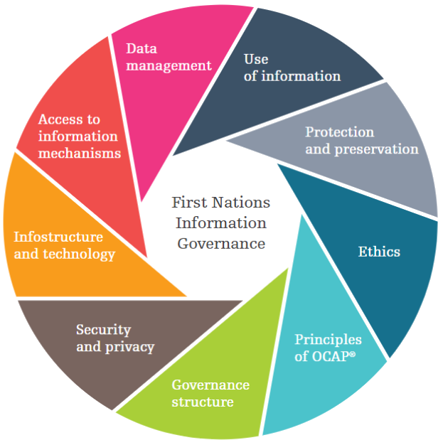
Governing information means regaining control over it.
Information governance allows First Nations to decide how their information is collected, used, shared, managed and protected.. It is based on structures and mechanisms that ensure the sovereign management of data that is essential to community decision-making and development.
In other words, First Nations are regaining power over their information in accordance with their own values, visions and needs.
What are information assets?
Information assets refer to any information concerning a First Nations group of individuals, organization or community, regardless of whether these assets are held by the First Nations or a third party, or whether they are tangible or intangible.
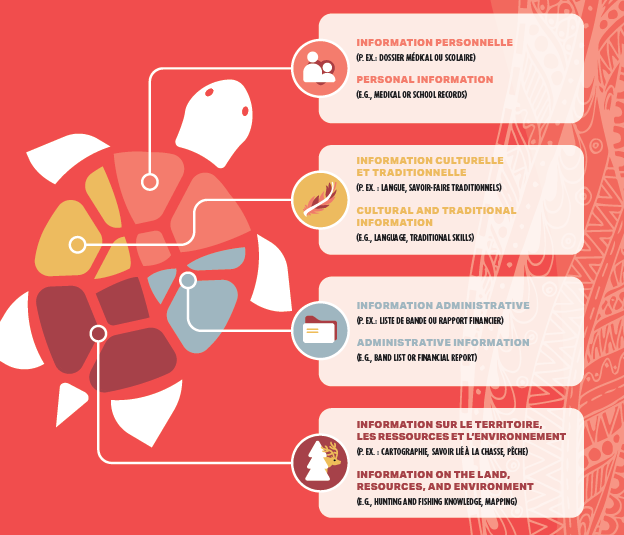
Information assets include four types of information:
- Personal information, such as medical or school records.
- Administrative information, such as a roster, financial report, or minutes.
- Cultural and traditional information, which includes language, ceremonies, stories, legends, songs, traditional skills, and traditional medicine and healing.
- Information about the land, resources, and environment, such as knowledge about plants and animals, cartography, and knowledge about hunting, fishing, gathering, and trapping.
The Quebec-Labrador First Nations Information Governance Strategy aims to:
- Enable First Nations to reclaim and protect their information heritage, in harmony with their right to self-determination and data sovereignty.
- Provide services that take into account the realities of First Nations local governments and their organizations in order to assist them and support the strengthening of their capacities in terms of managing and controlling information that concerns them.
- Support First Nations local governments in making informed decisions using reliable and representative data to effectively address the priorities and needs of their populations.

The Main Expected Benefits for First Nations
- Protection and promotion of First Nations cultures and knowledge.
- Fostering of the intergenerational transmission of information assets.
- Strengthening of decision-making through reliable and culturally relevant data.
- Improvement of services and contribution to the wellness of the population.
- Having an accurate and representative picture of the issues and the progress made.
- Improvement of access to information and data control.
- Support for the repatriation of information and data.
- Overall support for self-determination initiatives.
- Support for the creation of portraits with reliable data that is scientifically and culturally validated.
- Keeping of a directory of sources of information about First Nations.
- Building of local capacity.
- Support for the transfer of government responsibilities to First Nations structures.
- Strengthening of governance efforts by and for First Nations in all areas.
Benefits for the Quebec Ecosystem
The implementation of this strategy will also offer many benefits to the Quebec ecosystem, including access to a reliable data centre that consolidates First Nations’ information. It will also open up possibilities to explore new collaborations, co-develop data-sharing frameworks, exchange best practices, and benefit from networking.
Three Phases of Implementation
The information governance strategy is an ambitious project spanning several years. To ensure an effective and sustainable launch, it is being rolled out gradually in three major stages.
Each phase is essential to building a solid structure adapted to the realities of First Nations.
Phase 1
Laying the Foundation (in progress)
Phase 1 of the strategy aims to define the legal structure, service offerings, and operating framework of the future Regional Information Governance Centre. As communities and First Nations are at the heart of the strategy, several consultations are planned to better understand and identify their needs, strengths and issues in the area of information governance.
Phase 2
Progressive Implementation
This phase focuses on the initial deployment of the Regional Information Governance Centre’s services. This process will be guided by an adaptive approach based on the needs expressed by First Nations and will be continually adjusted to ensure that it meets those needs.
Phase 3
Full Deployment
Phase 3 marks the deployment of the regional centre, with the full implementation of services dedicated to information governance. The project will evolve in harmony with the pace of First Nations development, while respecting their cultures, languages, relationships and environments. Together, we are building a future where First Nations regain full control of their data and information assets, thereby ensuring the preservation and transmission of their knowledge.
Sound Information Asset Management
Information governance allows First Nations to decide how their information is collected, used, shared, managed and protected. Through appropriate structures, it ensures comprehensive data management to guide decision-making and foster community development.
The implementation of this strategy must also help address several obstacles to the sound management and governance of First Nations information assets in Quebec and Labrador:
- A lack of sustainable infrastructure (e.g., specialized human resources and technological tools) to support good information governance.
- The absence of appropriate government measures, despite numerous reports demonstrating the importance for First Nations to have access to and control over their data.
- Tools and systems that are ill-adapted to the needs, realities and cultures of First Nations.
- Underutilized information assets, for which data and knowledge are not fully leveraged.
- A lack of mechanisms to apply the principles of OCAP® (ownership, control, access, and possession) and effectively protect information.
By regaining full control of their information, First Nations can ensure governance consistent with their visions, values and needs.
